March 3, 2025
What Are AI Smart School Systems and Why Do They Matter?
If you've been keeping an eye on the latest developments in building technology, you've probably heard a lot of buzz around AI smart school systems. And honestly, the excitement is well-deserved. These integrated platforms are reshaping the way educational facilities operate, from how energy is managed to how students and staff move safely through a building. Whether you're a property manager overseeing a school campus, a business owner leasing space to an educational institution, or simply someone curious about smart building upgrades, understanding this technology can open some seriously valuable doors.
We're going to walk you through what AI-powered smart school systems actually are, how they work in real-world settings, and why investing in this kind of infrastructure makes sense, not just for educators, but for building owners and facility managers too.
How AI Smart School Systems Transform the Modern Classroom
At their core, AI smart school systems combine automation, data analytics, and machine learning to create environments that respond intelligently to the people using them. Think of it like this: instead of a building that just sits there, you have a facility that actively learns and adapts.
Here's a quick look at what that means in practice:
- Automated climate control that adjusts room temperature based on occupancy and time of day
- Smart lighting systems that dim or brighten depending on natural light levels and usage patterns
- Predictive maintenance alerts that flag equipment issues before they become costly repairs
- Integrated security platforms that monitor access points and flag unusual activity in real time
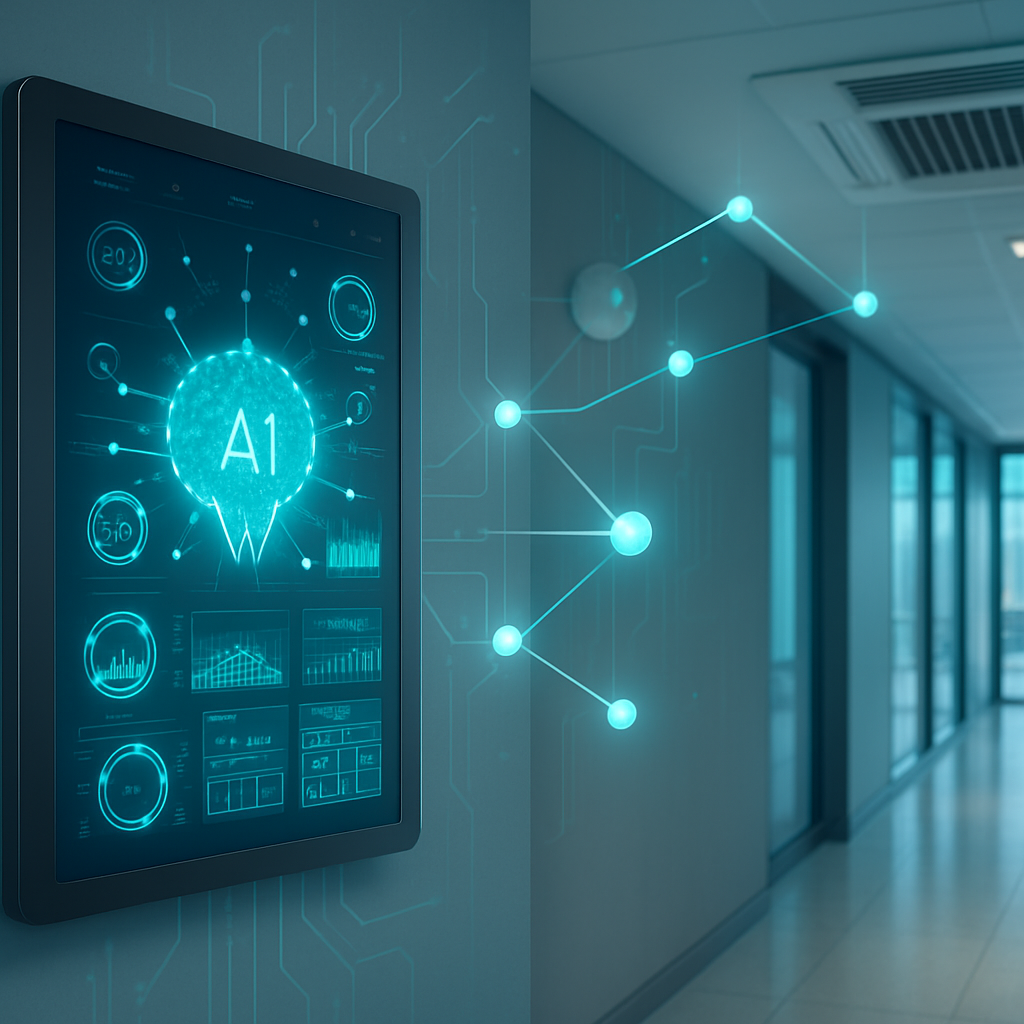
- Energy monitoring dashboards that give administrators a bird's-eye view of consumption across the entire facility
When all of these systems talk to each other through a centralized AI platform, the result is a building that runs more efficiently, costs less to maintain, and provides a dramatically better experience for everyone inside it.
The Learning Environment Gets a Real Upgrade
Let's be honest, a classroom that's too hot, too cold, or poorly lit is a classroom where learning suffers. Students lose focus. Teachers lose patience. And nobody's getting the most out of the day.
Smart systems solve this by creating consistent, comfortable conditions without anyone having to manually adjust a single thermostat. AI-driven climate management can maintain ideal temperature ranges throughout the school day, automatically accounting for how many people are in a room, what the weather is doing outside, and even what time of year it is.
Lighting automation works in a similar way. Sensors detect natural light levels and adjust artificial lighting accordingly, reducing eye strain and creating a more focused atmosphere. Some systems can even adjust lighting color temperature throughout the day, warmer tones in the morning to ease students in, brighter cooler tones during peak learning hours.
Safety and Security Gets Smarter Too
One of the most compelling reasons schools, and the property owners who manage them, are investing in AI-powered systems is enhanced safety. Traditional security setups rely heavily on human monitoring, which introduces gaps. AI changes the equation significantly.
Modern smart school security systems can include:
- AI-powered video surveillance that detects unusual behavior and sends alerts automatically
- Smart access control with keycards, biometrics, or mobile-based entry systems
- Emergency response automation that can lock down specific zones, trigger alerts, and notify authorities simultaneously
- Visitor management platforms that screen guests and log entry and exit data
For property managers and building owners, this kind of built-in security infrastructure is a significant value-add. It reduces liability, lowers insurance costs in many cases, and makes the property far more attractive to school operators who are understandably laser-focused on keeping students and staff safe.
The Business Case for Building Owners and Property Managers
Here's where things get really interesting for our audience. If you own or manage a property that houses, or could house, an educational facility, AI smart school systems aren't just a nice-to-have. They're quickly becoming a competitive differentiator in the market.
Energy Efficiency Translates Directly to Cost Savings
Schools are large buildings with long operating hours. Heating, cooling, and lighting all add up to substantial energy bills. When you layer AI-powered energy management on top of a traditional school building, the results can be striking.
Intelligent energy management systems can meaningfully reduce overall energy consumption. For a property owner, this means lower operating costs. For a school district or institution leasing your space, it means more budget available for what really matters, education.
That's a compelling sales pitch no matter which side of the table you're sitting on.
Predictive Maintenance Protects Your Investment
Any experienced property manager knows that reactive maintenance is expensive. Something breaks, you fix it, and you've lost time, money, and possibly a tenant's goodwill in the process. Predictive maintenance flips that script entirely.
AI systems continuously monitor HVAC units, electrical systems, plumbing infrastructure, and other critical building components. When something starts to show signs of stress, unusual vibration patterns, temperature anomalies, pressure fluctuations, the system flags it early. Your maintenance team gets a heads-up before a small problem becomes a major repair bill.
Over time, this kind of proactive approach can extend the lifespan of your building systems significantly. It also builds a track record of well-maintained infrastructure, which carries real weight when it comes to property valuation and tenant renewals.
Increased Property Value and Tenant Attraction
Smart building technology is becoming a standard expectation, not a luxury. Educational institutions, especially well-funded private schools, charter networks, and university satellite campuses, are actively seeking out technologically equipped spaces. Being ahead of that curve positions your property favorably.
Beyond attracting tenants, the upgrades themselves contribute to your property's assessed value. Energy-efficient, technology-integrated buildings can appraise higher than their traditional counterparts. If you're thinking long-term about your real estate portfolio, this is worth taking seriously.
Key Features to Look for in an AI School System
Not all smart school platforms are created equal. If you're evaluating options, either as a building owner looking to upgrade your property or as a facilities manager researching solutions, here are the features that really move the needle:
- Centralized management dashboard: A single interface that gives you visibility into all systems, energy, security, climate, and maintenance, in real time.
- Scalability: The system should grow with your needs. Whether you manage one building or a whole campus, it should scale without requiring a complete overhaul.
- Integration compatibility: The best AI systems play well with existing infrastructure. Look for platforms that integrate with your current HVAC, lighting, and security hardware where possible.
- Data analytics and reporting: You want actionable insights, not just raw data. Good platforms turn usage patterns into clear recommendations you can act on.
- User-friendly interface: If the system is too complicated to use, it won't get used. Look for platforms designed with non-technical users in mind.
- Reliable vendor support: Smart systems need ongoing support. Make sure your vendor has a strong track record for customer service and system updates.
Real-World Impact: What Schools Are Experiencing
The shift toward AI-powered school systems isn't theoretical, it's already happening in facilities across the country. Schools that implement these platforms can see a range of tangible improvements.
Operational Efficiency Goes Up
Administrative staff spend less time manually managing systems and more time on mission-critical tasks. Facilities teams respond to fewer emergency repairs. Building operators get cleaner data to inform their long-term planning decisions.
When all of that friction is removed from day-to-day operations, the cumulative effect is a noticeably smoother-running institution. Teachers and students feel it even if they can't always articulate exactly why.
Student Focus and Well-Being Improve
There's growing research linking the physical learning environment to student outcomes. Temperature, lighting, air quality, all of these factors influence cognitive performance and emotional regulation. AI systems that maintain optimal environmental conditions throughout the school day aren't just a comfort upgrade. They're a learning performance tool.
For property owners and managers, this is a meaningful talking point when marketing your space to prospective educational tenants. You're not just offering square footage, you're offering an environment designed to support learning.
Staff Satisfaction Rises
Teachers and administrative staff spend a lot of their working lives inside school buildings. When those buildings are well-maintained, comfortable, and safe, job satisfaction tends to go up and turnover tends to go down. That stability matters to school operators, and it's directly tied to the quality of the facility they're working in.
Getting Started: What the Upgrade Process Looks Like
If you're considering moving toward a smart school system for your property or managed facility, the process doesn't have to be overwhelming. Here's a general roadmap for how these projects typically unfold:
- Facility assessment: A technology partner or smart building consultant evaluates your current systems, identifies gaps, and outlines upgrade opportunities.
- Goal setting: You define what success looks like, lower energy costs, better security, reduced maintenance expenses, or all of the above.
- System design: A customized solution is designed based on your building's specific layout, existing infrastructure, and budget parameters.
- Phased implementation: Many projects roll out in stages, which minimizes disruption and allows for testing and adjustments along the way.
- Training and onboarding: Facility managers and administrative staff are trained on the platform so they can actually use what's been installed.
- Ongoing monitoring and optimization: The system continues to learn and improve over time, with regular check-ins from your technology partner.
The timeline and investment level will vary depending on the size and complexity of your facility, but the return on investment typically comes through energy savings and reduced maintenance costs.
A Well-Rounded Investment with Long-Term Returns
AI smart school systems represent a genuine leap forward, not just for the students and teachers who benefit from improved environments, but for the property owners and managers who are building long-term value into their real estate portfolios. The convergence of energy efficiency, predictive maintenance, enhanced safety, and improved learning outcomes makes this one of the most well-rounded technology investments available in the building sector today.
We're at a point where smart building technology is accessible, scalable, and proven. The question isn't really whether AI-powered systems are worth it. The question is how soon you want to start seeing the benefits.
For more on how AI and automation are changing business operations, browse our other articles.