Skip to content

#Content Strategy

Blog · Tag

Developing a Content Calendar for Your Small Business Website
Content Marketing

Developing a Content Calendar for Your Small Business Website

Creating consistent and engaging content for your small business website is crucial for building a loyal audience and increasing traffic. One effective way to achieve this is by developing a content calendar. A content calendar helps you plan and schedule your posts in advance, ensuring you maintain a consistent voice across all marketing channels and save time and stress by having a clear content strategy. To start, define your marketing goals, whether it's increasing website traffic, improving search engine rankings, or building your email list. Understanding your audience is equally important; know their interests and pain points to create engaging content tailored to them. Brainstorm various content ideas such as blog posts, videos, infographics, and social media updates that align with your business goals. Next, create a realistic schedule using tools like Trello, Asana, or Google Sheets. Consistency is key, so decide on a manageable frequency for posting. Begin writing your content, ensuring each piece is optimized for search engines with natural keyword integration and compelling headlines. Using tools like Hootsuite, Trello, or Asana can further streamline the process by offering scheduling, organization, and team collaboration features. Developing a content calendar can be a game-changer for your small business, aiding in organization, time management, and consistent value delivery to your audience. At Media & Technology Group, LLC, we specialize in web design, marketing automation, and much more. If you need assistance with your content strategy or any other aspect of your business, we're here to help. Read the full article to dive deeper into creating an effective content calendar for your small business website.

Sep 5, 2024

The Role of Social Media in Small Business SEO
Search Engine Optimization

The Role of Social Media in Small Business SEO

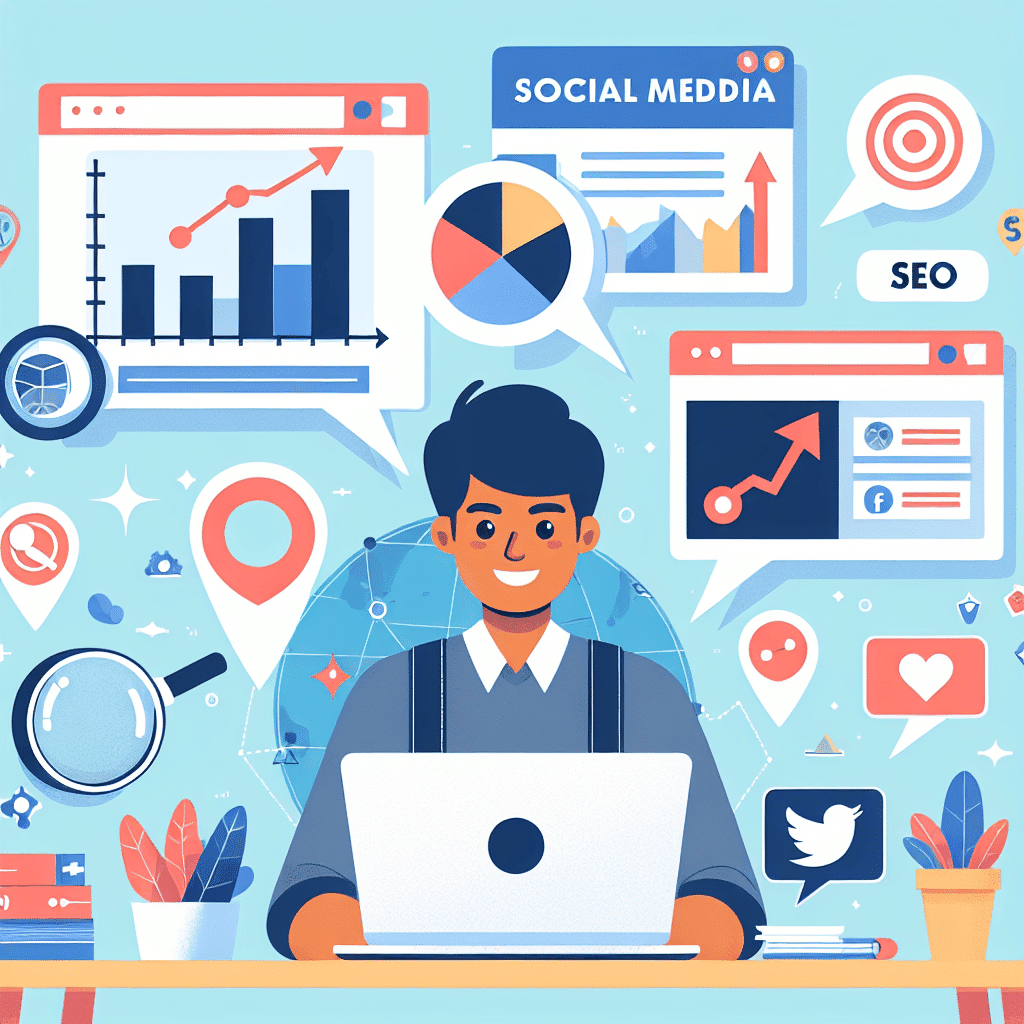
When it comes to achieving online success, social media and SEO are two powerful tools. Social media helps businesses connect with customers and share their stories, while SEO, or Search Engine Optimization, ensures that people can easily find them online. But how do these two elements work together to benefit small businesses? Social media can boost SEO in several ways. First, sharing content on platforms like Facebook and Twitter drives more traffic to your website, signaling its value to search engines. It also helps build backlinks when others share your content on their sites, contributing to SEO success. Additionally, social media platforms allow for real-time engagement through comments, shares, and likes, illustrating to search engines that your content is engaging. Choosing the right social media platform plays a significant role. Each platform has its unique strengths—Facebook is ideal for community building and detailed posts, Instagram excels with visual content like product photos, and Twitter is perfect for real-time updates and linking to your site. Focusing on where your audience spends the most time ensures your efforts are well-spent. Creating authentic, consistent, and keyword-rich content is crucial for both social media and SEO. Authenticity helps connect with audiences, while consistency keeps them engaged. Including relevant keywords makes your content more searchable and improves SEO. Analytics should not be overlooked. Tools like Google Analytics help track the effectiveness of your social media efforts, guiding future strategies for better results. Social media and SEO truly complement each other, and small businesses can leverage their synergy for growth. At Media & Technology Group, LLC, we specialize in strategies that integrate both elements to help your business stand out online. Interested in learning more? Read the full article to discover how social media and SEO can transform your business.

Sep 4, 2024

The Power of Storytelling in Small Business Content Marketing
Content Marketing

The Power of Storytelling in Small Business Content Marketing

Storytelling plays a crucial role in small business content marketing by capturing attention and fostering connections with potential customers. People are naturally drawn to stories because they evoke emotions and are easier to remember than plain facts. For small businesses looking to stand out, incorporating storytelling into content marketing can be a game-changer. At its core, storytelling builds trust and connection with the audience. By sharing parts of your business's journey, from its inception to overcoming significant challenges, you create a narrative that resonates with readers. This connection encourages potential customers to support your business. To effectively integrate storytelling, start by identifying your audience and understanding what matters to them. Every business has a unique story, whether it’s the founder’s journey or transformative customer experiences. Utilize emotions to engage your audience—happiness, excitement, and empathy can make your content memorable. Moreover, simplicity can be powerful; sometimes, a short, impactful story can be more effective than a lengthy one. Examples of storytelling in content marketing include sharing customer success stories and offering behind-the-scenes glimpses of your business operations. These approaches build trust and transparency, fostering a deeper connection with your audience. Incorporating storytelling in content marketing can significantly increase website traffic, leading to more potential customers and boosting sales. Engaging content is more likely to be shared, broadening your reach and exposure. At Media & Technology Group, LLC, we recognize the power of storytelling and are dedicated to helping businesses leverage it for growth. If you need assistance with your content marketing strategy, contact us today. Let’s tell your story together! Read the full article to learn more about the power of storytelling in small business content marketing and how it can benefit your business.

Sep 3, 2024

How to Create a Winning Content Strategy for Your Small Business
Content Marketing

How to Create a Winning Content Strategy for Your Small Business

Business owners looking to boost website traffic, this is your guide! At Media & Technology Group, LLC, we emphasize the significance of a robust content strategy to help businesses grow. Here’s a focused approach to developing such a strategy for your small business. First, understanding your audience is essential. Determine who they are, their pain points, and the type of content they consume. Tools like Google Analytics can offer valuable insights. Setting clear, specific, and measurable goals will give your content strategy direction. For example, aim to increase website traffic by 25% within three months rather than just seeking more traffic. Leveraging keywords forms the backbone of your strategy. Use tools like Google’s Keyword Planner to find industry-specific terms and integrate these naturally within your content, including variations and using keywords in headings. Creating valuable content should focus on solving your audience’s problems, not just promoting your business. Engaging content, whether blog posts, videos, or infographics, builds trust and positions you as an authority in your field. Consistency is key; a content calendar can help you plan and schedule posts, ensuring you stay top-of-mind with your audience. Amplify your content through social media to maximize reach, engaging with your audience to foster community around your brand. Finally, it’s crucial to measure your strategy’s success. Using analytics tools to track website traffic, bounce rates, and conversion rates allows you to analyze performance and adjust your strategy continually. A winning content strategy requires understanding your audience, setting clear goals, leveraging keywords, creating valuable content consistently, utilizing social media, and measuring results. At Media & Technology Group, LLC, we’re here to guide you to success with our marketing and technology services. Ready to see your small business soar? Read the full article to dive deeper.

Sep 1, 2024

Best AI Marketing Automation Platforms for 2024
Digital Marketing

Best AI Marketing Automation Platforms for 2024

As we journey into 2024, AI marketing automation tools have become essential for enhancing efficiency and saving time. At Media & Technology Group, LLC, we specialize in helping marketing agencies streamline their operations with the best AI tools available. The real value of these platforms lies in their ability to handle repetitive tasks, freeing your team to focus on creative and strategic efforts. Among the top AI marketing automation tools to watch in 2024 are HubSpot, Mailchimp, and Marketo. HubSpot is widely favored for its comprehensive suite that includes email marketing and social media management, boosted by AI features like predictive lead scoring and content strategy. Mailchimp has grown beyond email marketing, offering AI-powered automation features that personalize customer interactions. Meanwhile, Marketo, part of the Adobe suite, excels with its AI-driven analytics that help you target the right audience at the right time. To maximize the benefits of these tools, it's important to start small, train your team, measure your success, and integrate these platforms with your CRM. These steps ensure that all features are utilized effectively, providing a good return on investment. Looking ahead, AI in marketing is poised to become even more intuitive, potentially predicting trends before they happen. The future is bright, and 2024 could be your most efficient year yet. Dive deeper into the specifics and discover how to fully leverage these tools by reading the full article.

Sep 1, 2024

The Future of Digital Marketing: AI-Driven Trends for 2024
Digital Marketing

The Future of Digital Marketing: AI-Driven Trends for 2024

The future of digital marketing is set to be heavily influenced by artificial intelligence (AI) in 2024, promising transformative changes across various aspects of the industry. One of the most significant trends is the rise of personalized customer experiences. AI enables marketers to gather and analyze data to tailor content that aligns with individual preferences, enhancing engagement and conversion rates. Additionally, AI-powered customer service is becoming more sophisticated, with chatbots and virtual assistants offering efficient, 24/7 customer support. Automated content creation is another emerging trend, with AI now capable of generating articles, product descriptions, and social media posts, allowing marketers to focus on strategic tasks. However, it's crucial to review AI-generated content to ensure it matches brand voice. Predictive analytics also plays a pivotal role in forecasting future outcomes, aiding in better decision-making and resource allocation. In the realm of email marketing, AI is optimizing campaigns by analyzing data to predict what content will resonate most with subscribers, leading to higher engagement rates. Lastly, AI is revolutionizing ad targeting by creating highly targeted ads, improving ROI and reducing ad spend waste. As AI continues to evolve, staying abreast of these trends will be essential for delivering better services and achieving improved results. For those looking to integrate AI into their marketing strategies, Media & Technology Group, LLC. offers a range of AI implementation and marketing automation services. Embrace the AI-driven future and revolutionize your digital marketing approach! Read the full article to explore these emerging AI trends in more detail.

Aug 31, 2024

The Complete Guide to Website Analytics and Conversion Optimization for Small Businesses
Analytics

The Complete Guide to Website Analytics and Conversion Optimization for Small Businesses

As a small business owner, establishing an online presence is essential, but understanding how to measure your website's performance is equally crucial. This is where website analytics come into play. Website analytics provide valuable insights into visitor data and are integral for conversion optimization. They allow you to see what's working and what needs improvement, ultimately helping you enhance user experience and boost conversion rates. Key metrics to monitor include unique visitors, page views, average session duration, bounce rate, and conversion rate. These metrics give you a comprehensive view of your website’s performance and areas for improvement. However, tracking analytics is just the initial step. The next critical phase is conversion optimization—guiding your visitors to take actions that benefit your business. A user-friendly design is pivotal; it ensures ease of navigation and strategically positions calls-to-action (CTAs) to keep visitors engaged. Moreover, compelling and informative content is vital in retaining visitors and addressing their pain points effectively. Utilizing analytics tools such as Google Analytics, Hotjar, and Crazy Egg can significantly aid in tracking performance and optimizing conversion rates. The integration of these tools, offered by Media & Technology Group, LLC, enhances your ability to make data-driven decisions. Artificial Intelligence (AI) can further bolster your efforts by quickly analyzing vast amounts of data to identify trends and inform your strategies. Continuous improvement through regular monitoring and audits ensures your website adapts to the ever-changing digital landscape. For small businesses, understanding and leveraging website analytics and conversion optimization is not just beneficial but necessary. At Media & Technology Group, LLC, we provide various services, including design and AI implementation, to help you transform your website into a robust tool for customer engagement and retention. Want to delve deeper? Read the full article to explore how website analytics and conversion optimization can elevate your small business.

Aug 31, 2024