March 1, 2025
What Is AI Code Review and Why Does It Matter?
If you've ever shipped software with a bug that slipped past your team, you already know how costly a missed code review can be. AI code review is changing the way development teams catch errors, enforce standards, and ship cleaner software, faster than ever before. And for business owners investing in custom software development, understanding this technology can help you make smarter decisions about the teams you work with.
In this post, we'll walk you through exactly what AI-assisted code review is, how it works alongside human developers, and why it's becoming an essential part of modern software development. Whether you're just starting to explore software solutions or you're deep into a product build, this information will help you ask better questions and set higher expectations.
The Traditional Code Review Process (And Its Limitations)
Traditional code review follows a straightforward pattern: one developer writes code, another reviews it before it gets merged into the main codebase. That process has worked for decades, and it still works. But it also has real limitations that shape exactly where AI tools add value.
In a standard workflow, one developer writes code and another developer (or sometimes a small group) reviews it before it gets merged into the main codebase. The reviewer is looking for things like:
- Logic errors or bugs
- Security vulnerabilities
- Poor performance patterns
- Code that's hard to read or maintain
- Violations of the team's coding standards
This process works. It has been the backbone of quality software development for decades. But it also has real limitations that every experienced development team has run into.
Human Reviewers Get Tired
Code review is mentally demanding work. After a long day of writing their own code, even the sharpest developers can miss things during a review. Attention fades. Patterns that should stand out don't. And when teams are under deadline pressure, reviews sometimes get rushed.
Reviews Can Be Inconsistent
Different reviewers catch different things. One developer might be great at spotting security issues but less focused on performance. Another might prioritize clean formatting but miss subtle logic errors. This inconsistency means the quality of a review often depends on who happens to be available, not a reliable foundation for high-quality software.
Bottlenecks Slow Everything Down
In fast-moving projects, code reviews can create serious bottlenecks. When a senior developer is the only one reviewing code, everything waits on their availability. This slows down delivery and adds frustration for everyone on the team.
How AI Code Review Tools Work
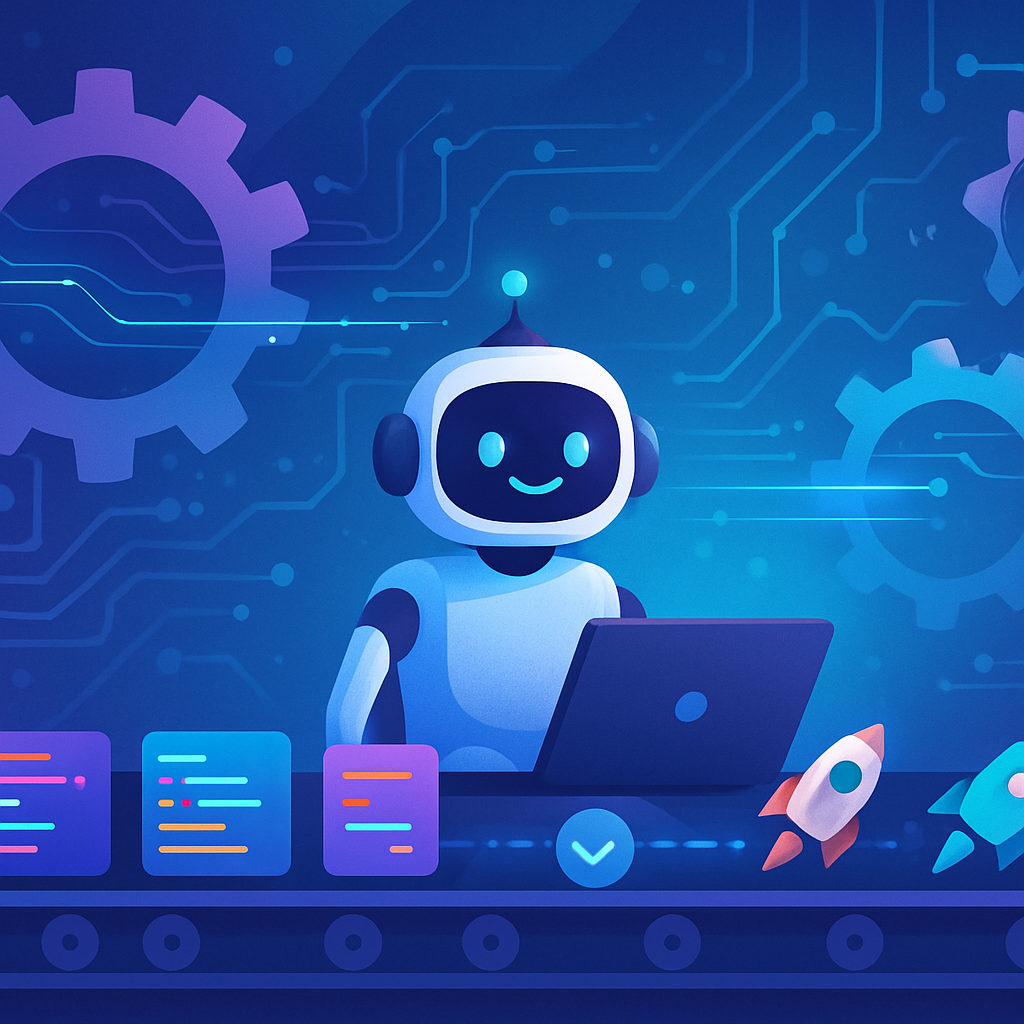
AI-powered code review tools use a combination of machine learning, static analysis, and large language models to analyze code automatically, often in real time as developers write it, or as part of an automated check before the human review even begins.
These tools are trained on enormous datasets of code, including both good and bad examples, known vulnerabilities, and established best practices. Over time, they get remarkably good at recognizing patterns that signal problems.
What AI Can Detect
Modern AI review tools can flag a wide range of issues, including:
- Security vulnerabilities: things like SQL injection risks, hardcoded credentials, or insecure API calls
- Code smells: patterns that aren't technically broken but indicate design problems that will cause headaches later
- Performance issues: inefficient loops, unnecessary database calls, or memory leaks
- Style and formatting inconsistencies: keeping the entire codebase readable and uniform
- Logic errors: conditions that could produce unexpected or incorrect results
- Outdated dependencies: libraries or packages with known security risks
Popular AI Code Review Tools in Use Today
There are several well-established tools that development teams integrate into their workflows. Each has its strengths depending on the tech stack and the team's needs:
- GitHub Copilot (with code review features): deeply integrated with one of the most popular development platforms
- CodeClimate: strong focus on maintainability and test coverage
- SonarQube: widely used for static analysis across many programming languages
- DeepCode (now Snyk Code): focuses heavily on security vulnerabilities
- Amazon CodeGuru: integrates well with AWS-based projects
Many teams use a combination of these tools depending on the project. No single tool catches everything, and layering them with human expertise is where the real value comes from.
AI Code Review vs. Human Code Review: It's Not Either/Or
One common misconception is that AI code review tools will eventually replace human reviewers. We don't see it that way, and frankly, neither does the broader development community.
AI and human code review are complementary. A simple way to think about it:
- AI is great at speed, consistency, and breadth: it can scan thousands of lines of code in seconds and never gets tired
- Humans are great at context, judgment, and nuance: they understand the business logic, the user experience, and the "why" behind decisions
When we combine the two, something powerful happens. AI handles the routine, time-consuming checks so that human reviewers can focus their energy on the things that actually require thought, experience, and creativity.
A Real-World Example
Imagine a developer submits a pull request with 400 lines of new code. Without AI assistance, a human reviewer needs to go through all of it line by line, including dozens of minor formatting issues, a handful of potential security concerns, and a couple of performance red flags.
With AI code review in the pipeline, the tool automatically flags those issues before the human even opens the pull request. The reviewer can now skip straight to the meaningful questions: Does this feature make sense architecturally? Is the business logic correct? Are there edge cases the developer didn't consider?
The result is faster, more focused, and ultimately better reviews.
The Business Benefits of AI-Assisted Code Review
As a business owner, you might be wondering: "This sounds great for developers, but what does it mean for me?" That's a fair question. Here's how AI-assisted code review translates into real business outcomes.
Fewer Bugs Reach Production
Every bug that makes it into your live software costs money, in developer time to fix it, in potential downtime, and sometimes in lost customers or reputation damage. AI tools catch a significant percentage of issues before they ever get close to deployment. That means fewer emergency patches, fewer unhappy users, and a more stable product.
Faster Development Cycles
When routine review tasks are handled automatically, the entire development process moves faster. Code gets reviewed and approved more quickly, which means features ship sooner. For businesses that depend on regular product updates or fast time-to-market, this matters a lot.
Lower Long-Term Costs
Technical debt, the accumulation of shortcuts and poor code quality over time, is one of the most expensive problems in software development. It makes everything slower and harder as a product grows. AI code review helps keep technical debt under control from day one, which means lower maintenance costs and more manageable development work down the road.
Better Security Posture
Security vulnerabilities in software can have devastating consequences, from data breaches to regulatory penalties. AI tools that specialize in security scanning can continuously check code against known vulnerability patterns, dramatically reducing the risk that a security flaw slips through undetected.
Consistency Across the Team
When a development team grows or changes, maintaining consistent coding standards gets harder. AI tools enforce those standards automatically, regardless of who wrote the code or who reviewed it. This is especially valuable for businesses working with larger teams or multiple contractors.
What to Look for in a Development Partner Who Uses AI Code Review
If you're evaluating software development companies, AI-assisted code review is a good indicator of a team's overall commitment to quality. Here are some things you can ask about:
- What automated review tools do you use? A strong team should be able to name specific tools and explain why they chose them.
- How does AI fit into your overall QA process? AI review should be one layer of a broader quality assurance strategy, not the only one.
- How do you handle findings from automated tools? There should be a clear process for triaging, addressing, and documenting issues flagged by AI.
- Can you show examples of how automated review improved code quality in past projects? Concrete examples demonstrate real experience, not just familiarity with the tools.
- How do you balance automation with human expertise? The best teams know when to trust the AI and when to override it with human judgment.
A development partner who can answer these questions clearly and confidently is one who takes code quality seriously, and that's exactly who you want building your product.
Common Concerns About AI Code Review
Business owners often raise a few recurring concerns about AI-assisted code review. Let's address them directly.
"Won't AI just add noise and slow things down?"
This is a legitimate concern if tools are poorly configured. AI tools can generate false positives, flagging things that aren't actually problems. The key is proper setup and tuning. A good development team will configure these tools thoughtfully so they catch real issues without overwhelming developers with unnecessary alerts.
"Does AI understand our specific business context?"
Not entirely, and that's okay. AI tools are not meant to replace the contextual understanding that comes from knowing your business, your users, and your goals. That's what experienced human developers bring to the table. AI handles the technical layer; humans handle the judgment layer.
"Is this technology mature enough to trust?"
Absolutely. Tools like SonarQube and GitHub's security scanning features have been in production use at major companies for years. The technology continues to improve, but it's already proven and reliable for the core use cases that matter most.
Building AI Code Review Into the Process
Great software is built through disciplined processes, not just talented individuals. That's why the strongest teams bake AI code review into how they work instead of treating it as an afterthought.
Done well, that means automated scanning, consistent standards enforcement, and focused human review that goes beyond the surface level. Think of it as giving developers superpowers: the ability to write faster, catch more, and deliver cleaner code without burning out on repetitive checks.
The result is software that's more reliable, more secure, and easier to build on over time.
What This Means for Your Software Investment
AI-assisted code review isn't a silver bullet, but it is a meaningful leap forward in how high-quality software gets built. When implemented thoughtfully, as part of a broader quality culture that includes skilled human developers, it makes everything better.
For business owners, the takeaway is simple: the development partners who embrace these tools are the ones most likely to deliver software that works the way it should, ships on time, and holds up as your business grows.
If you want to talk through how this applies to your organization, the first consultation with Media & Technology Group is free.