August 20, 2025
What LLM Fine-Tuning Services Actually Do for Your Business
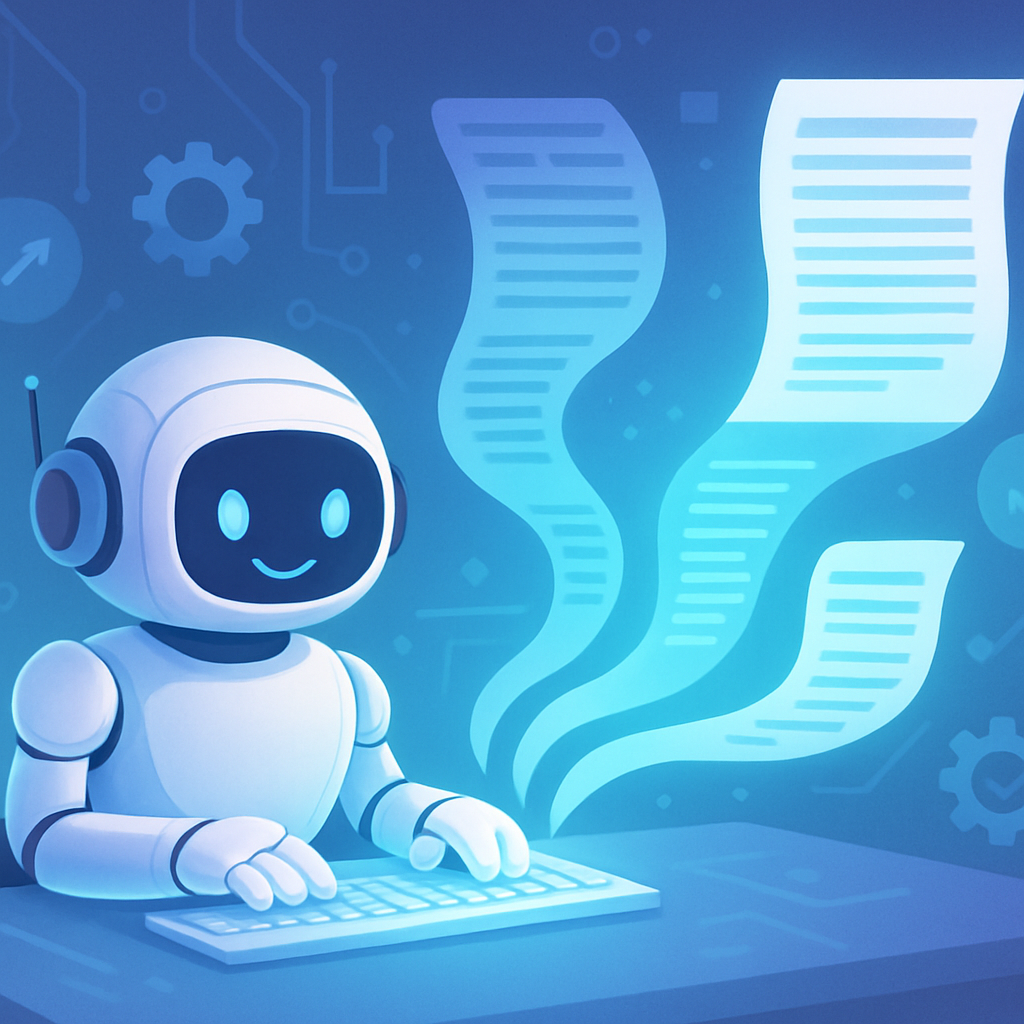
LLM fine-tuning services take a general-purpose AI model and train it further on your specific data, so it responds the way your business needs it to, not the way a generic chatbot would. If you've used ChatGPT and thought "this is close, but it doesn't know our products, our tone, or our processes," fine-tuning is what closes that gap.
This post explains how fine-tuning works, what to look for when choosing a provider, and how to decide whether a managed service or a DIY approach makes more sense for where you are right now.
How Fine-Tuning Works (Without the Jargon)
A base model like GPT-4 or Llama 3 is trained on enormous amounts of general text from the internet. It knows a lot, but it doesn't know your business. Fine-tuning takes that model and runs it through an additional training process using examples you provide, such as customer service conversations, internal documents, product descriptions, or industry-specific Q&As.
The result is a model that behaves like a subject-matter expert in your domain. It uses your terminology, follows your tone guidelines, and gives answers that are grounded in your data rather than guessing from general knowledge.
Fine-Tuning vs. Prompt Engineering vs. RAG
These three approaches are often confused, and they're not interchangeable. Here's how they differ:
- Prompt engineering means writing better instructions to an existing model. It's fast and free, but the model still has no memory of your business between sessions.
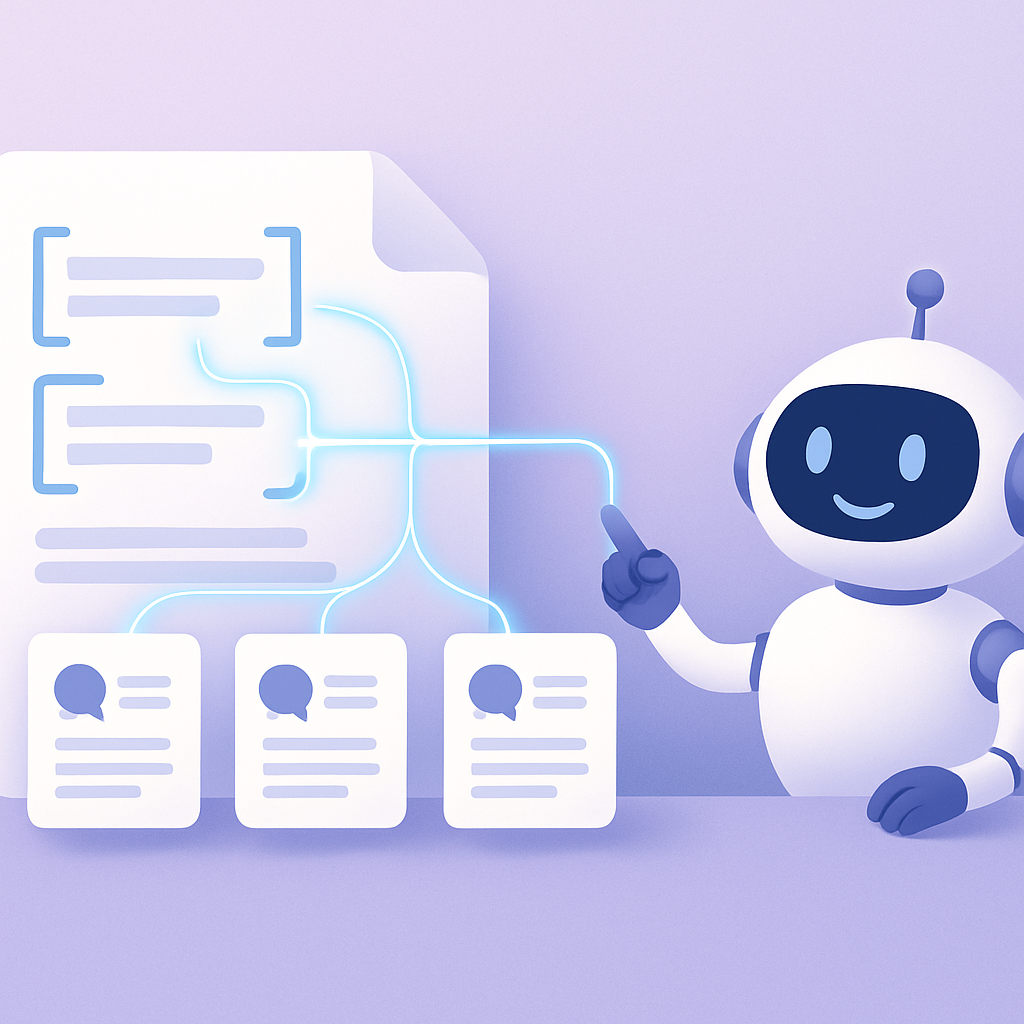
- Retrieval-augmented generation (RAG) connects a model to a database of your documents at query time. It's good for large, frequently updated knowledge bases but adds latency and complexity.
- Fine-tuning bakes your knowledge and style directly into the model's weights. It's slower to set up but produces consistent, fast, on-brand responses without needing to retrieve documents every time.
Most real-world deployments combine at least two of these. Fine-tuning handles tone and format; RAG handles dynamic or frequently changing facts.
What to Look for in LLM Fine-Tuning Services
Not every provider offering fine-tuning delivers the same quality or level of support. If you're evaluating options, here are the factors that actually matter.
Data Handling and Privacy
Your training data is often your most sensitive business asset: customer records, proprietary processes, internal communications. Before signing anything, ask a provider exactly where your data goes, how long it's stored, whether it's used to train shared models, and what happens to it after training is complete.
A serious provider will give you written answers to all of these. If they can't, move on.
Model Selection and Flexibility
Some services lock you into one model. Others let you choose from several, including open-source options you can host yourself. Open-source fine-tuning (using models like Mistral, Llama 3, or Falcon) gives you more control over cost and deployment, especially if you want to run the model on your own infrastructure.
Ask whether the provider supports the models you're considering, and whether they can advise you on which one fits your use case and budget.
Evaluation and Quality Testing
Fine-tuning without evaluation is guesswork. A good provider builds testing into the process: they define success metrics before training starts, run the fine-tuned model against test prompts, and compare output quality against the base model and your benchmarks.
Ask to see sample evaluation reports from past projects. The numbers they share should be specific and honest, not just "it performed better."
Ongoing Support and Iteration
The first fine-tuned model you deploy probably won't be your last. As your business changes, as your data grows, or as the base model gets updated, you'll need to retrain. Find out whether a provider treats fine-tuning as a one-time transaction or as part of a longer relationship.
Cost Structure
Fine-tuning costs vary widely depending on the model size, the amount of training data, compute time, and how many training runs you need. Ask for itemized estimates and watch for providers who bundle in services you don't need. You should understand what you're paying for at each step.
Types of LLM Fine-Tuning Services Available
The market has split into a few distinct categories. Knowing which type fits your situation saves time and money.
Managed End-to-End Services
These providers handle everything: data preparation, training, evaluation, and deployment. You bring your data and your use case; they handle the technical work. This is the right choice if you don't have machine learning engineers on your team and want predictable outcomes without learning infrastructure.
The tradeoff is cost and some loss of visibility. You're trusting the provider's judgment on technical decisions, so make sure they explain their choices clearly.
Platform-Based Self-Serve Fine-Tuning
Several platforms (including OpenAI's own fine-tuning API and others) let you upload training data, choose a model, and run the process yourself through a dashboard. This is faster and cheaper than a managed service, but it assumes you know how to prepare training data properly, choose hyperparameters, and evaluate output quality.
If you're technically comfortable and working with a well-defined, stable use case, this can be a good path. If you're not sure what "training data format" means, managed service is likely the better starting point.
Consulting and Implementation Firms
Some firms specialize in AI strategy and implementation rather than running compute themselves. They help you define your use case, prepare your data, manage the fine-tuning process on third-party compute, and integrate the model into your workflows. This model works well for mid-size organizations that want expert guidance but also want flexibility in their technology choices.
At MTG, this is how we approach custom AI work: we focus on what you need the model to do, then build the process around that goal, whether through our Accelimate AI platform, Intellimate AI, or a custom implementation through our Build tier.
Common Use Cases for Custom Fine-Tuned Models
Fine-tuning makes the most sense when a general model consistently falls short in a specific, repeatable way. Here are the situations where it tends to deliver the clearest value.
Customer Support Automation
A fine-tuned model trained on your product documentation, past support tickets, and resolution history can handle a high percentage of tier-one inquiries accurately and in your company's tone. It reduces agent load without producing the generic, off-brand responses that frustrate customers.
Internal Knowledge Assistants
Many organizations have years of institutional knowledge locked in documents, wikis, and email threads. A fine-tuned model trained on that material can answer employee questions, surface relevant policies, and reduce time spent searching for information.
Content Generation with Brand Voice
Marketing teams often spend significant time editing AI-generated content to match brand guidelines. Fine-tuning on approved content samples can dramatically reduce that editing time by producing output that already follows your voice, format, and terminology.
Industry-Specific Tasks
Legal document review, medical intake summaries, financial analysis narratives, technical support for specialized equipment: these are all areas where general models make too many errors on domain-specific language. Fine-tuning on professional datasets can bring accuracy to a level where the output is actually usable.
How to Prepare Your Data Before Reaching Out to a Provider
The quality of a fine-tuned model depends almost entirely on the quality and structure of your training data. Providers can help with data preparation, but the better you understand your own data going in, the faster and cheaper the process will be.
- Identify your examples. What does a good response look like? Gather 50 to 200 real examples of the kind of input-output pairs you want the model to produce. More is better, but quality beats quantity.
- Clean your data. Remove personally identifiable information, errors, and examples where the response is wrong or inconsistent. Garbage in, garbage out applies directly here.
- Format consistently. Most fine-tuning pipelines expect data in a specific format, typically JSON with clearly labeled input and output fields. Ask your provider what format they need before you start converting files.
- Define your success criteria. Decide in advance how you'll know the fine-tuned model is working. Response accuracy, tone consistency, and hallucination rate are all measurable. Without criteria, you can't evaluate the result.
Red Flags When Evaluating Providers
A few patterns show up repeatedly with providers who overpromise and underdeliver.
- They can't explain their evaluation process in concrete terms.
- They guarantee accuracy percentages without seeing your data first.
- They're vague about where your data is stored or who can access it.
- They recommend fine-tuning for every problem, even ones that prompt engineering or RAG would solve more cheaply.
- They have no process for iteration or model updates after initial deployment.
The best providers will sometimes tell you that fine-tuning isn't what you need yet. That kind of honest scoping is a sign of a firm worth working with.
Making the Decision: When Fine-Tuning Is Worth It
Fine-tuning adds time and cost upfront. It makes sense when the use case is stable and repeatable, when the volume of interactions is high enough to justify the investment, and when a general model's outputs are genuinely insufficient for your needs.
It doesn't make sense as a first step if you haven't tried prompt engineering or RAG yet. Start simpler, measure the gap, and fine-tune when you've confirmed that simpler approaches can't close it.
If you're not sure where your situation falls, book your free first consultation with our team and we'll help you map out the right approach for your use case.