December 24, 2025
AI Telemedicine Is Changing How Providers Deliver Care at a Distance
AI telemedicine is no longer a pilot program or a future-state ambition. Clinicians and health systems are using artificial intelligence right now to triage patients before they ever speak to a provider, monitor chronic conditions between visits, and flag deteriorating patients hours before a crisis develops. For healthcare organizations navigating the demands of a distributed patient population, understanding where these tools work and where they fall short is essential.
What AI Actually Does in a Telehealth Encounter
The word "AI" gets applied to a wide range of technologies in healthcare, so it helps to be specific. In a telehealth context, AI generally refers to machine learning models, natural language processing, or computer vision systems that analyze data and produce a clinically relevant output. That output might be a risk score, a documentation draft, a symptom triage decision, or an alert.
Three capabilities show up most consistently in deployed telehealth platforms today:
- Automated triage and symptom checking. Patients answer structured questions through a chatbot or intake form before the visit. The AI categorizes acuity, routes low-acuity cases to asynchronous care, and escalates urgent cases to a live provider. This reduces wait times and allows providers to prepare before the visit begins.
- Ambient clinical documentation. AI listens to the encounter, transcribes the conversation, and generates a structured SOAP note or visit summary. The provider reviews and signs, rather than typing. Several health systems report measurable reductions in after-hours documentation time using this approach.
- Real-time decision support. During a video visit, an AI layer can surface relevant clinical guidelines, flag drug interactions based on the patient's medication list, or prompt the provider to screen for a condition the patient's history suggests.
These are distinct functions, and a given platform may offer one, two, or all three. When evaluating a telehealth tool, it's worth confirming which of these capabilities is native to the platform and which requires a third-party integration.
Remote Patient Monitoring: Where AI Earns Its Keep
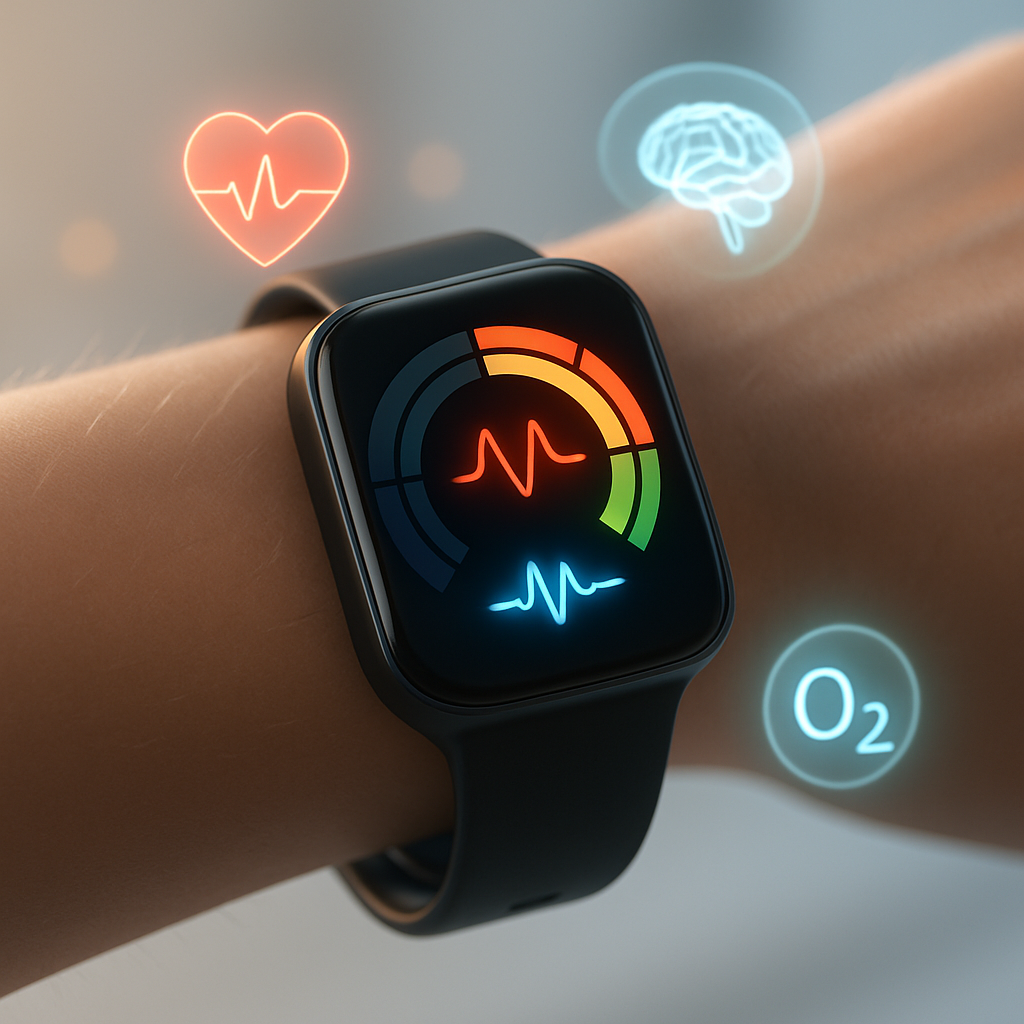
Remote patient monitoring (RPM) is the practice of collecting patient health data outside a clinical setting and transmitting it to a provider. Devices range from simple Bluetooth-connected blood pressure cuffs to continuous glucose monitors, cardiac patches, and pulse oximeters. The data volume these devices generate is the core challenge: a cardiac patch worn for 14 days can produce millions of data points that no care team has time to review manually.
This is where AI creates real operational value. A machine learning model trained on RPM data can:
- Detect patterns that precede a decompensation event in heart failure patients, such as gradual weight gain paired with reduced activity and rising resting heart rate
- Identify atrial fibrillation from a single-lead ECG with accuracy that approaches that of a cardiologist in controlled studies
- Stratify a panel of RPM patients by risk level each morning, so the care team focuses outreach on the five patients who need a call, not the fifty who are stable
- Distinguish signal from artifact, reducing false alarms that cause alert fatigue among nursing staff
The practical result is that a care coordinator managing a panel of 300 RPM patients can work through that panel systematically instead of drowning in raw data. The AI handles the surveillance; the human handles the judgment and the relationship.
Chronic Disease Management as a Use Case
Chronic disease management is the highest-volume RPM application, and AI has the most established track record here. Diabetes management programs use continuous glucose monitor data to adjust insulin recommendations between visits. Hypertension programs catch blood pressure trends before they become emergencies. Pulmonary programs track peak flow readings in COPD patients and intervene earlier during exacerbations.
What makes AI useful in these programs is not any single prediction but the consistency. An algorithm checks every data point from every patient every day, without fatigue, without the variability that comes from shift changes, and without the delays that occur when a care team is stretched thin. The clinical staff still make decisions, but they make them on curated, prioritized information rather than raw streams.
Post-Acute Care and Hospital-at-Home
Hospital-at-home programs admit patients to receive acute-level care in their own homes, monitored remotely. AI plays a central role in making this model safe. Continuous vital sign monitoring, combined with predictive models that learn each patient's individual baseline, can alert a clinical team when parameters drift outside expected ranges, even when the absolute values are still within normal limits.
This individual-baseline approach is a meaningful improvement over threshold-based alerting, which generates a high volume of false positives because it applies population-level cutoffs to individual patients. A resting heart rate of 95 might be entirely normal for one patient and a warning sign for another.
Specific Applications for Pharmaceutical Companies
Pharmaceutical manufacturers and life sciences organizations interact with AI telemedicine in ways that differ from direct care delivery, but the operational relevance is just as high.
Clinical Trial Recruitment and Retention
Recruiting patients into clinical trials is expensive and slow. AI-powered tools can analyze EHR data across a health system to identify patients who meet trial eligibility criteria, then flag those patients for outreach. On the retention side, RPM and telehealth visits reduce the burden of participation for patients in Phase II and III trials, which improves completion rates, particularly for trials that would otherwise require frequent in-person site visits.
Real-World Evidence Collection
Post-approval, pharmaceutical companies need real-world evidence (RWE) on how drugs perform outside controlled trial conditions. RPM data, collected through AI-enabled telemedicine programs, represents a high-resolution stream of real-world patient behavior and health outcomes. AI tools that structure and analyze this data can surface safety signals and adherence patterns that claims data or periodic office visits would miss entirely.
Patient Adherence Programs
Digital therapeutics and companion apps increasingly use AI to monitor medication adherence and intervene when patients show signs of drifting from their regimen. For specialty medications where adherence directly determines efficacy and where non-adherence carries serious health consequences, these programs serve both patient outcomes and commercial goals.
The Practical Limits of AI in Telemedicine
Being realistic about limitations is what separates a useful clinical tool from an overpromised one. AI in telemedicine has genuine constraints that healthcare leaders should understand before committing to a platform or program.
Data Quality Determines Model Quality
An AI model is only as good as the data it was trained on. Models trained predominantly on data from large academic medical centers may perform differently when deployed in a community health setting with a different patient population, different documentation practices, and different device types. Before deploying an AI-powered RPM or triage tool, ask the vendor where the training data came from and whether the model has been validated on a population similar to yours.
Alert Fatigue Remains a Real Risk
AI tools that generate too many alerts, or alerts that are too often wrong, train clinical staff to ignore them. This defeats the purpose of automated surveillance entirely. When evaluating RPM platforms, look at the specificity of the alerts, not just the sensitivity. A system that catches every true positive but generates fifty false positives for each one is a burden, not an asset.
Integration with Existing Systems
Most healthcare organizations run on EHR platforms that were not designed with AI in mind. Getting AI-generated insights into the clinical workflow, where providers will actually see and act on them, often requires integration work that the vendor's sales process can understate. Plan for integration as a first-class project, not an afterthought.
Regulatory and Liability Considerations
AI tools that influence clinical decisions are subject to FDA oversight in the United States, particularly those that meet the definition of a Software as a Medical Device (SaMD). The regulatory pathway depends on the risk level and the degree to which the tool replaces versus supports clinician judgment. Healthcare organizations deploying these tools should confirm the vendor's regulatory status and understand what the organization's own liability exposure looks like when an AI recommendation is involved in an adverse outcome.
Choosing an AI Telemedicine Platform That Works for Your Organization
The market for telehealth and RPM tools is crowded, and AI is a frequent selling point regardless of how substantive the underlying capability is. A few questions cut through the noise:
- What specific clinical outcomes has this tool improved, and in what patient population?
- How does the AI output enter the clinical workflow? Is it visible where providers work, or does it require them to open a separate system?
- What data does the model use, and how is it kept current as clinical practice and patient populations evolve?
- What is the vendor's regulatory status for the AI components, and who holds liability when the tool is wrong?
- What does implementation actually involve, including EHR integration, staff training, and ongoing support?
These questions shift the conversation from features to function. Any vendor with a credible product will be able to answer them directly.
Building an Operational Foundation for AI-Enabled Care
Even the best AI telemedicine tool underperforms when the operational infrastructure around it is weak. Workflows need to be designed around the new capabilities, not layered on top of old ones. Staff need training that goes beyond button-clicking: they need to understand what the AI is doing, what it can get wrong, and how to use its outputs appropriately.
Data governance matters too. RPM programs generate patient health data at high volume, and that data needs to be stored, transmitted, and accessed in ways that meet HIPAA requirements. Consent workflows must be clear. Patients need to understand what is being monitored, who reviews the data, and how quickly someone will respond if the system flags a concern.
Organizations that treat AI telemedicine as a technology purchase, rather than an operational change, consistently underperform those that invest equally in the people and process side of the program.
The integration of AI into telemedicine and remote monitoring is mature enough now that the question is no longer whether to adopt it but how to do so with enough care to realize the clinical and operational benefits. If you want to explore how AI-powered workflows and platforms can support your organization's care delivery or life sciences programs, reach out to us to schedule your free first consultation.