July 16, 2026
The Kitchen Chaos We All Know Too Well
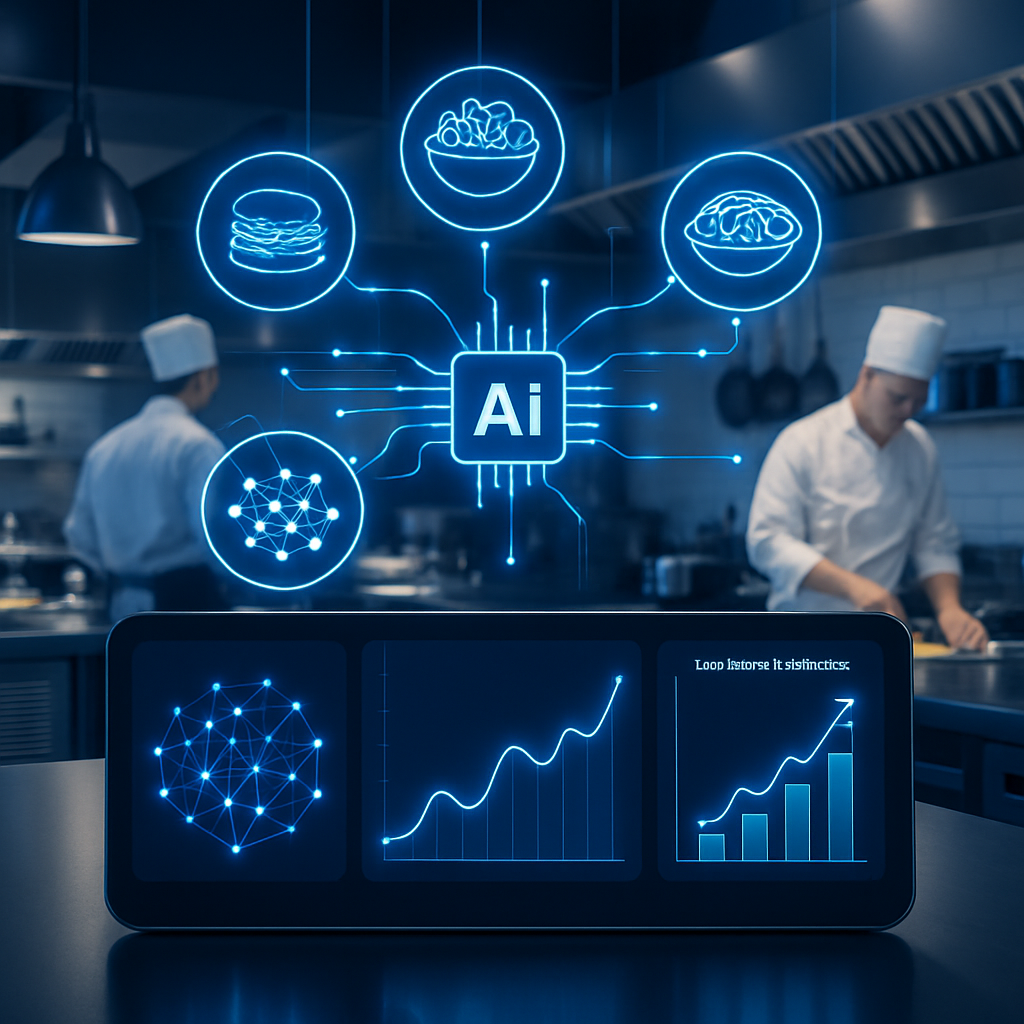
If you run a restaurant, you already know the feeling. It's a Friday night, you're slammed with tickets, your best line cook just called out sick, and food costs crept up again this month without a clear reason why. Sound familiar? Plenty of restaurant owners know that feeling. That's exactly why AI kitchen operations have become one of the most exciting developments in the food service industry, and why we think every restaurant owner should at least understand what's possible.
AI isn't just for tech companies or big corporate chains anymore. It's becoming a practical, affordable tool that helps real kitchens run smoother, waste less, and produce more consistent food, even when staffing is tight.
What Does AI in Kitchen Operations Actually Mean?
Let's clear something up right away. When we talk about AI in the kitchen, we're not talking about robots flipping burgers (at least, not for most kitchens). We're talking about smart software tools that help you:
- Predict how much food you'll need on any given day
- Track inventory in real time
- Standardize recipes so every plate looks and tastes the same
- Identify where food waste is happening
- Schedule staff more efficiently based on expected demand
These are problems every restaurant faces. AI just helps solve them faster and more accurately than spreadsheets or gut instinct alone.
How AI Kitchen Operations Help Cut Food Costs
Food cost is one of the biggest headaches in this business. Prices change constantly, suppliers aren't always reliable, and it can feel impossible to know exactly how much to order without either running out or throwing food away.
Smarter Inventory Management
AI-powered inventory tools can connect to your point-of-sale system and track what's being sold in real time. When a dish sells, the system automatically deducts the ingredients from your inventory count. This means you always know what you have on hand, no more manual counting at 11 PM before a big weekend.
Some systems even send automatic alerts when something is running low or when an ingredient is about to expire. That kind of visibility helps you act before waste happens, not after.
Demand Forecasting That Actually Works
One of the smartest things AI does is look at your historical sales data, combined with things like weather, local events, and seasonal trends, and predict how busy you'll be. That means you can order the right amount of product, prep the right amount of food, and avoid both over-ordering and running 86s on your most popular dishes.
For a restaurant dealing with fluctuating costs, this kind of planning can make a real difference on the bottom line.
Recipe Costing and Menu Optimization
AI tools can also analyze your menu and help you understand which dishes are actually profitable. They factor in ingredient costs, prep time, and sales volume to show you what's working and what's quietly draining your margins.
With that information, you can make smarter decisions, like adjusting portion sizes, swapping out expensive ingredients, or promoting your highest-margin items more aggressively.
Tackling the Staffing Problem With AI Support
Finding and keeping good kitchen staff is arguably the toughest challenge in the restaurant industry right now. Turnover is high, qualified cooks are hard to find, and training takes time you often don't have. AI won't replace your team, but it can make life easier for the staff you do have, and help you run lean without sacrificing quality.
Training New Staff Faster
Some AI-powered platforms offer digital recipe guides and step-by-step prep instructions that new employees can follow on a tablet or screen. Instead of relying on a single experienced cook to train everyone, your documented processes do a lot of the heavy lifting.
This is huge for consistency. When every team member follows the same system, your food quality doesn't drop just because your best cook has a day off.
Smarter Scheduling
AI scheduling tools can look at your forecasted demand and help you build staffing schedules that match your actual needs. You're not overstaffing on slow nights or scrambling to add people when you're slammed. Better scheduling also tends to keep employees happier, fewer surprise shifts, more predictable hours.
Reducing the Burden on Experienced Staff
When your seasoned kitchen workers don't have to babysit inventory counts, chase down ordering details, or re-explain recipes for the tenth time, they can focus on what they do best, cooking great food. That kind of relief goes a long way toward retention.
Real Benefits in the Industry
We want to be honest with you, AI tools aren't magic, and they don't solve everything overnight. But the results restaurant operators are reporting are genuinely impressive:
- Food waste reduction, thanks to better inventory tracking and demand forecasting
- Lower food costs through smarter ordering and portion control
- Improved consistency in food quality, even with less experienced staff
- Faster onboarding for new hires using digital training tools
- Better labor efficiency by matching staffing levels to real demand
None of these benefits require a massive technology overhaul. Many restaurants start with just one or two tools and build from there.
Where to Start With AI in Your Kitchen
Start with one problem, not the whole kitchen. Here's a simple way to think about getting started:
- Identify your biggest pain point. Is it food costs? Waste? Consistency? Staffing? Start there.
- Look for tools that integrate with what you already use. Many AI platforms connect directly to popular POS systems like Toast, Square, or Lightspeed.
- Start small and measure results. Try one tool for 60 to 90 days and track the impact before adding more.
- Involve your team. The technology works best when your staff is on board and trained to use it.
The restaurant industry moves fast, and standing still isn't really an option. But adopting new technology doesn't have to feel overwhelming. Taking one small step can lead to real, measurable improvements in your operation.
AI Tools Work Best When You Start Specific
Running a restaurant is hard. Costs go up and down, good employees are tough to find and even harder to keep, and the pressure to deliver consistent, high-quality food never lets up. AI kitchen operations tools aren't a silver bullet, but they are a genuine way to take some of that burden off your plate.
When your kitchen has better data, smarter systems, and more consistent processes, everything gets a little easier, for you, for your team, and for your guests.
For more on how AI and automation are changing business operations, browse our other articles.