Skip to content

#Personalized Medicine

Blog · Tag

How AI is Revolutionizing Medical Diagnosis and Imaging
Healthcare

How AI is Revolutionizing Medical Diagnosis and Imaging

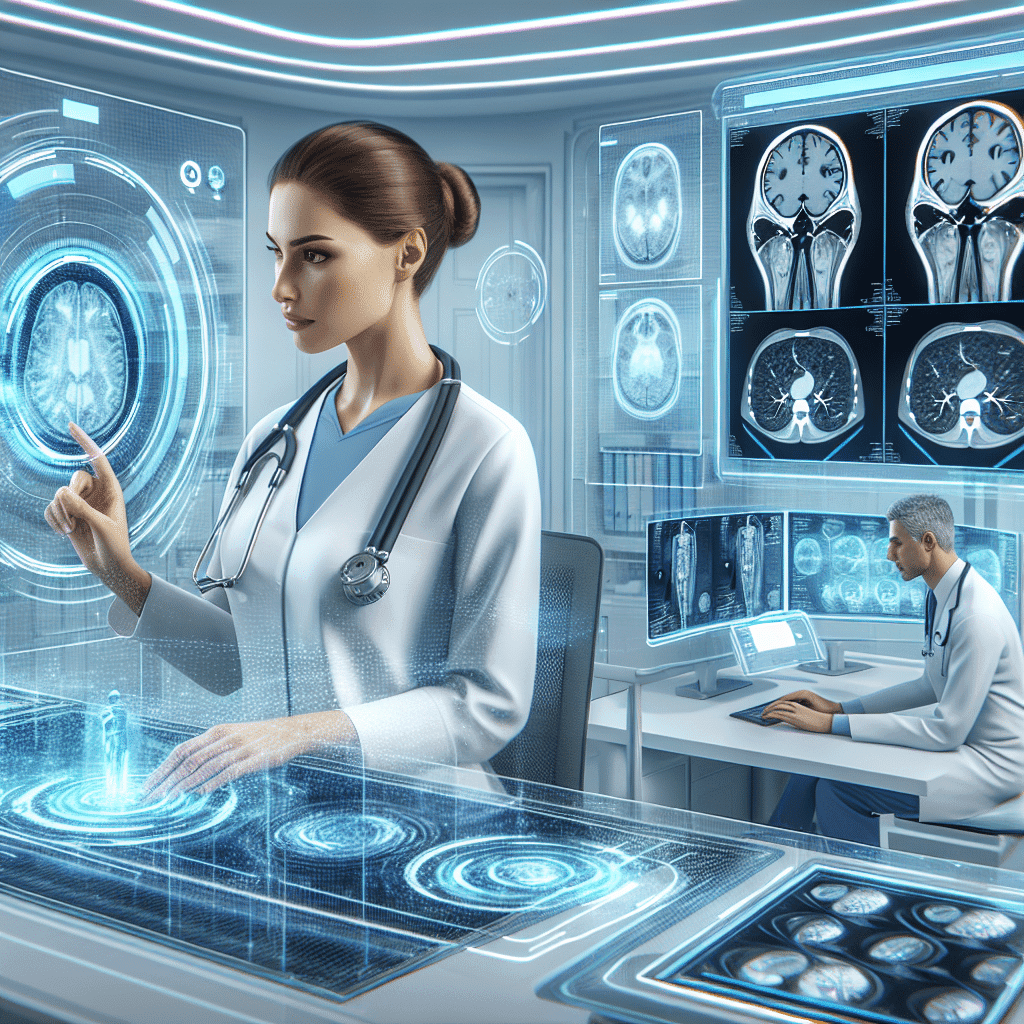
Artificial Intelligence (AI) is rapidly transforming medical diagnosis and imaging, bringing numerous benefits to healthcare providers and pharmaceutical companies. AI systems, utilizing machine learning algorithms, can analyze vast amounts of medical data quickly and efficiently, enabling faster diagnoses and treatment plans while reducing human error. These systems have shown high accuracy in detecting diseases like cancer at early stages by analyzing imaging scans. In medical imaging, AI technologies such as deep learning enhance the quality of techniques like MRI, CT scans, and X-rays, facilitating more accurate diagnoses. AI can also reconstruct damaged images and fill in gaps from poor-quality scans, benefiting even low-resource settings. Healthcare providers can streamline patient data management, allowing them to focus more on patient care, aided by real-time data analysis and automated documentation. Pharmaceutical companies can leverage AI to speed up drug discovery processes. Machine learning algorithms predict how compounds will behave, leading to faster, more accurate drug development, reduced costs, and shorter clinical trial timeframes. The future of AI in medical diagnosis and imaging holds exciting prospects: integration with wearable devices for continuous monitoring, personalized medicine through genomic analysis, and enhanced telemedicine capabilities. Media & Technology Group, LLC is committed to staying at the forefront of these innovations, offering cutting-edge solutions and expert consulting to help healthcare and pharmaceutical companies harness AI's full potential. To explore how AI can revolutionize your medical practices, read the full article.

Sep 2, 2024

The Future of Healthcare: AI-Driven Medical Trends for 2024
Healthcare

The Future of Healthcare: AI-Driven Medical Trends for 2024

The healthcare landscape is undergoing a significant transformation, driven by the rapid evolution of artificial intelligence (AI). As we approach 2024, several AI-driven trends are poised to make a profound impact on the medical field. One of the most promising advancements is predictive analytics, which uses AI algorithms to analyze vast amounts of data and identify patterns, enabling healthcare providers to predict patient outcomes and manage disease risks proactively. Furthermore, AI is revolutionizing administrative tasks by automating scheduling, insurance claim processing, and patient record management, thereby reducing human error and increasing efficiency. In diagnostics, AI-powered systems are now capable of analyzing medical images with high accuracy, leading to quicker and more accurate diagnoses, particularly in detecting cancers. Personalized treatment plans are another significant benefit of AI, as it can tailor healthcare to individual patient needs by examining medical records, lifestyle data, and genetic information. This customization ensures more effective treatment options for patients. Telemedicine has been catapulted into the mainstream largely due to the pandemic, and AI is enhancing it further with virtual health assistants that provide real-time consultations, medication reminders, and vital signs monitoring, making healthcare more accessible and efficient. In drug development, AI's ability to analyze extensive research data swiftly is expediently identifying potential drug candidates, thereby accelerating the creation of new treatments and cures. As these AI healthcare trends continue to evolve, their adoption could be crucial for staying competitive in the healthcare and pharmaceutical industries. For a more comprehensive understanding of these groundbreaking AI trends and their implications, read the full article.

Sep 2, 2024