October 6, 2026
What Are AI Agents, And Why Do You Need the Right Tools?
Understanding what an AI agent actually is will shape every tool choice you make, so it's worth getting clear on that before looking at the best AI agent development tools for 2026.
An AI agent is a program that can think, plan, and take actions on its own to complete a goal. Think of it like a really capable digital assistant that doesn't just answer questions, it actually does things. It can browse the web, write code, send emails, manage files, and even coordinate with other AI agents to get complex tasks done.
Building one without the right tools means reinventing a lot of solved problems. The right framework handles memory, model connections, and action chaining so you can focus on what your agent actually needs to do.
Whether you're a complete beginner or someone who's just starting to experiment with AI, this breakdown will help you figure out which tools fit your skill level, your budget, and your goals.
The Best AI Agent Development Tools for 2026
This list focuses on what's actually useful and accessible right now: tools that real developers and beginners are using to build working AI agents in 2026.
1. LangChain
Best for: Beginners who want structure and flexibility
LangChain is one of the most popular frameworks for building AI agents, and for good reason. It gives you pre-built components that handle a lot of the complicated stuff for you, like connecting to language models, managing memory, and chaining together multiple actions.
Think of it like LEGO blocks for AI. Each block does something specific, and you snap them together to build something bigger.
Here's what makes LangChain great for newcomers:
- Tons of documentation and tutorials online
- Supports multiple AI models, including GPT-4, Claude, and open-source options
- Has built-in tools for web search, database access, and more
- Large community, so when you get stuck, help is easy to find
The learning curve is real, but it's manageable. If you know a little Python, you can start building a basic agent in a single afternoon.
2. AutoGen (by Microsoft)
Best for: Multi-agent systems and automated conversations
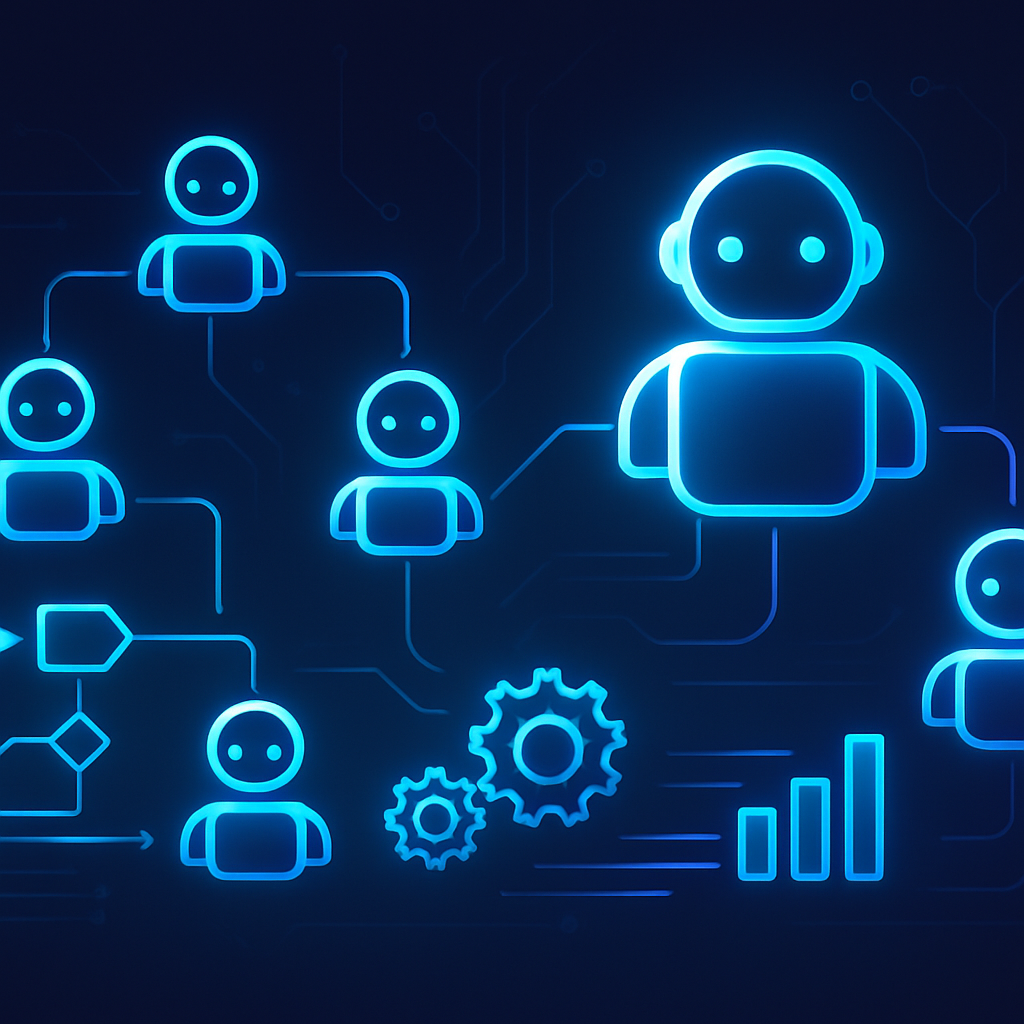
AutoGen is Microsoft's open-source framework designed specifically for building systems where multiple AI agents work together. Imagine one agent doing research, another writing a report, and a third reviewing it for errors, all automatically, without you lifting a finger.
That kind of teamwork between agents is exactly what AutoGen is built for.
Key features include:
- Easy setup for multi-agent "conversations"
- Human-in-the-loop options, so you can step in when needed
- Compatible with OpenAI and Azure models
- Great for automating complex, multi-step workflows
AutoGen is a little more advanced than LangChain for total beginners, but Microsoft has invested heavily in making its documentation beginner-friendly. If you're excited about agents working as a team, this is the tool to explore.
3. CrewAI
Best for: Building role-based agent teams quickly
CrewAI has become one of the most talked-about tools in the AI agent space, and once you see what it does, you'll understand why. It lets you define a "crew" of AI agents, where each agent has a specific role, goal, and set of tools.
You might create a crew with a researcher, a writer, and an editor. Each one knows its job. You give the crew a task, and they collaborate to get it done.
What sets CrewAI apart:
- Very clean and readable code, great for beginners
- Built on top of LangChain, so it inherits a lot of its power
- Role-based design makes it easy to think in "team" terms
- Fast-growing community with plenty of example projects
If you learn LangChain first, picking up CrewAI will feel very natural. It's a great next step once you understand the basics.
4. OpenAI Assistants API
Best for: Beginners who want to skip the framework and build fast
If setting up a whole framework sounds overwhelming, the OpenAI Assistants API might be your best starting point. It lets you create AI agents directly through OpenAI's platform, no complex setup required.
You can give your assistant a name, a set of instructions, and tools like code interpretation or file search. Then you call it through an API and let it go to work.
Here's why it's beginner-friendly:
- No framework to install or configure
- Managed infrastructure, OpenAI handles the backend
- Built-in tools for reading files and running code
- Works with GPT-4o and other top-tier models
The downside? You're locked into OpenAI's ecosystem, and costs can add up if you're running a lot of tasks. But for learning and prototyping, it's hard to beat.
5. LlamaIndex
Best for: Agents that work with your own data
Let's say you want to build an AI agent that answers questions about your company's internal documents, or reads through a bunch of PDFs to find specific information. That's where LlamaIndex shines.
While LangChain is more about connecting actions together, LlamaIndex is more focused on connecting AI to your data. It helps you organize, index, and retrieve information so your agent can actually use it intelligently.
Top features for data-heavy projects:
- Supports hundreds of data sources, PDFs, databases, websites, and more
- Built-in tools for Retrieval-Augmented Generation (RAG), which helps agents find the right info before responding
- Works well alongside LangChain and other frameworks
- Strong documentation with beginner-focused tutorials
If your agent needs to be smart about a specific set of information, not just general knowledge, LlamaIndex is a tool you'll want in your toolkit.
6. Flowise and LangFlow
Best for: Visual learners who don't want to write code
Not everyone learns by writing code, and that's completely okay. Flowise and LangFlow are visual, drag-and-drop tools that let you build AI agent workflows using a graphical interface, no coding required.
You connect blocks together on a canvas, each block representing a step in your agent's process. It's a practical way to understand how agents work before you write any code.
Both tools offer:
- A no-code or low-code interface for building agent workflows
- Integration with popular AI models and tools
- The ability to export and run your flows locally or in the cloud
- A great visual way to understand agent logic
These tools are perfect if you're still learning the concepts and want to see how everything connects before writing a single line of Python.
How to Choose the Right Tool for You
With so many options, it's easy to feel overwhelmed. Here's a simple way to think about it based on where you're starting from.
If You're a Complete Beginner
Start with either Flowise or LangFlow to get a visual feel for how agents work. Once you're comfortable with the concepts, try the OpenAI Assistants API to build your first real agent without worrying about frameworks.
If You Know a Little Python
Jump into LangChain. It's the most widely used framework, has the most tutorials, and once you know it, everything else becomes easier. From there, try CrewAI to build more sophisticated, multi-agent setups.
If You're Working With Custom Data
Add LlamaIndex to your stack. Pair it with LangChain or CrewAI and you'll have a powerful setup for building agents that know their subject matter deeply.
If You Want Multi-Agent Collaboration
Explore AutoGen or CrewAI. Both are built with teamwork between agents in mind and make it surprisingly simple to define roles and delegate tasks automatically.
Things to Keep in Mind When Getting Started
Before you pick a tool and start, here are a few practical tips that will save you a lot of headaches:
- Start small. Don't try to build a 10-agent system on day one. Build one agent that does one thing well. Then expand from there.
- Understand prompt engineering. Your agent is only as good as the instructions you give it. Learning how to write clear, effective prompts is more important than choosing the "best" tool.
- Watch your API costs. Every time your agent calls an AI model, it costs money. Set usage limits early so you don't get a surprise bill.
- Use version control. Even if you're just experimenting, save your work in GitHub. You'll thank yourself later.
- Join a community. The AI agent space moves fast. Following communities on Reddit, Discord, and X (formerly Twitter) will keep you updated on new tools, tips, and best practices.
What's Coming in 2026 and Beyond
AI agent technology is evolving faster than almost anything else in software right now. Here are a few trends worth watching as you build your skills:
Smarter Memory Systems
One of the big limitations of today's agents is memory, they often forget what they did in earlier sessions. New tools are emerging that give agents long-term memory so they can learn from past interactions and improve over time.
More Reliable Planning
Early AI agents would sometimes get confused and make the wrong moves when completing complex tasks. In 2026, planning capabilities are getting much more reliable, which means agents can handle longer, multi-step goals without going off the rails.
Voice and Multimodal Agents
Agents are no longer just text-based. You'll increasingly see tools that let agents see images, hear audio, and even interact with video content, making them far more versatile for real-world use cases.
Better Safety and Control
As agents become more powerful, controlling what they can and can't do becomes critical. The tools in 2026 are putting a much stronger emphasis on safety guardrails, permission systems, and human oversight.
Where to Go From Here
You don't need to be an expert to start building AI agents. The tools available today, from visual drag-and-drop builders to powerful coding frameworks, make it more accessible than ever. The key is to start somewhere and keep learning.
Here's a simple action plan to get you moving:
- Pick one tool from this list based on your current skill level
- Follow one beginner tutorial all the way through
- Build something small, even if it's just an agent that summarizes a webpage
- Then expand, experiment, and keep going
The best time to start learning AI agent development was a year ago. The second best time is right now.
For more on how AI and automation are changing business operations, browse our other articles.